Picket
A distributed, layered counter-UAS and air-defense system connecting sensing, fusion, electronic defeat, kinetic response and operator command.
Configurations
Approach belt
Overlapping nodes form a defensive line across the likely threat axis.
Mission & capability
- Contest
- Counter-UAS detection
- Electronic defeat
- Counter-air intercept
- Mission command and bounded authority
- Type
- Configuration
- Domain
- Systems & Equipment
- System
- Picket
- Connected elements
- 09Components and integrations
Point defense
A ring protects a base, port, industrial asset or other defined site.
Mission & capability
- Contest
- Counter-UAS detection
- Electronic defeat
- Counter-air intercept
- Mission command and bounded authority
- Type
- Configuration
- Domain
- Systems & Equipment
- System
- Picket
- Connected elements
- 09Components and integrations
Expeditionary defense
Palletized, vehicle-mounted or UGV-mounted elements move with the force.
Mission & capability
- Contest
- Counter-UAS detection
- Electronic defeat
- Counter-air intercept
- Mission command and bounded authority
- Type
- Configuration
- Domain
- Systems & Equipment
- System
- Picket
- Connected elements
- 09Components and integrations
Approach belt
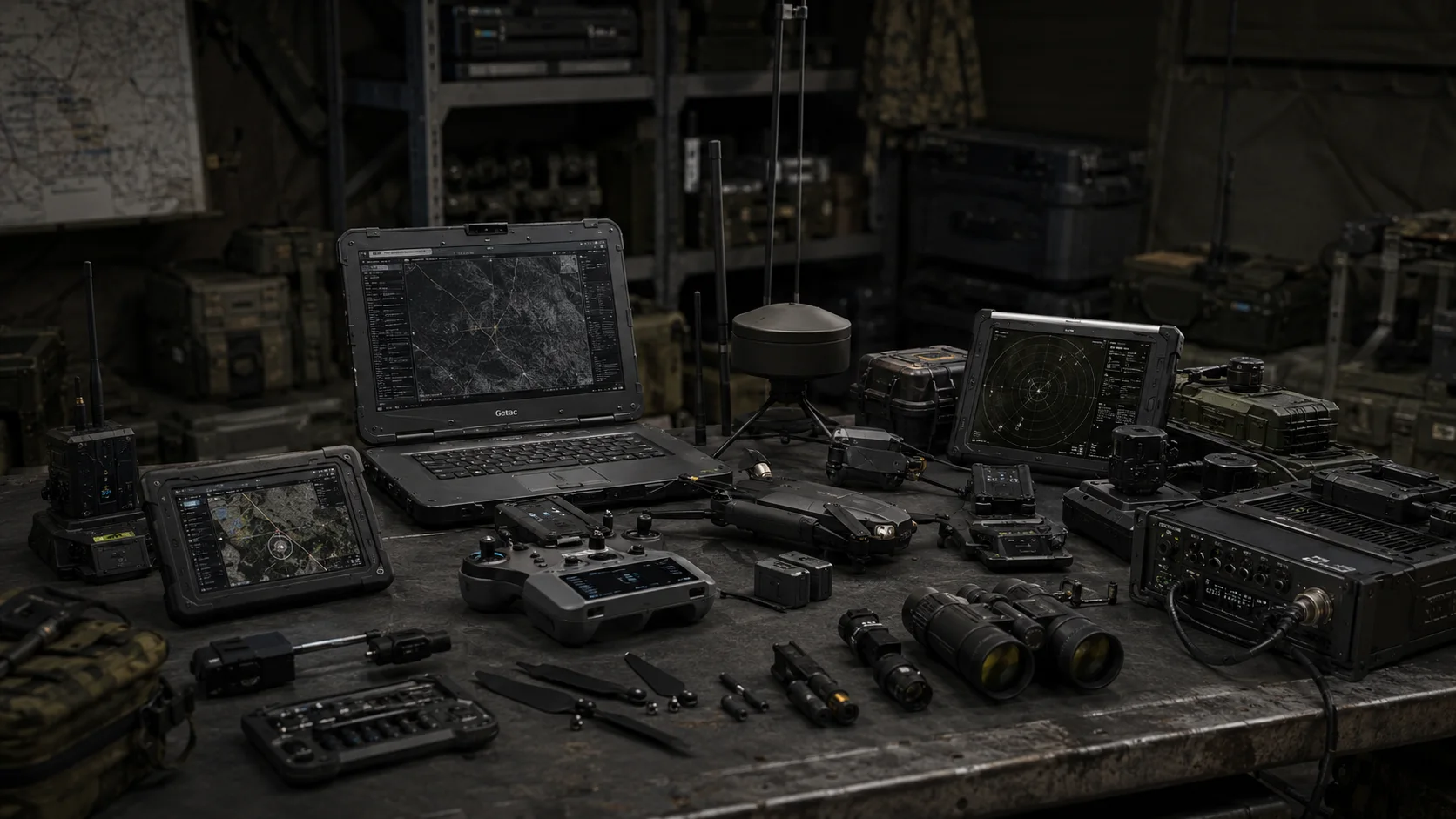
Picket connects detection, track fusion, electronic defeat, kinetic interception and operator command into one counter-UAS and air-defense system. Distributed nodes protect an approach corridor, a fixed asset or a deployed force without making one sensor or one effector carry the entire mission.
The gap it closes
Air defense fails when detection, decision and defeat sit on separate screens and separate timelines. A cue must become a classified track; the track must reach the right response layer; the operator must understand and authorize the action; the system must retain magazine and node state after the engagement.
Picket closes that chain through Sentinel.
Detect, decide, defeat, sustain
| Layer | Function | Tairos system relationship |
|---|---|---|
| Sense | Detect and track with RF, acoustic, optical and radar inputs | Drone detection, Iris sensing and integrated external radar feeds |
| Decide | Correlate tracks, prioritize threats and assign a suitable response | Sentinel Fusion and Command, presented through Panorama |
| Defeat softly | Disrupt suitable control or navigation paths | EW soft-kill |
| Defeat kinetically | Engage threats that require a physical intercept | Strix/FPV low-end layer, Nova-I dedicated interceptor layer and an integrated terminal gun layer |
| Sustain | Maintain operator, communications, node and magazine state | Ground segment and Sentinel housekeeping |
The response sequence begins with the lowest-cost suitable layer and escalates only when the threat or outcome requires it.
The node
A Picket node combines a ready effector or sensor function, local power, communications and a Sentinel edge presence. Standardized mechanical, power, data and command interfaces allow nodes and effectors to be configured around the defended area.
Each node contributes to the shared picture. Removing one node does not remove the system’s entire sensing or command path; neighboring coverage and distributed processing preserve the belt where geometry permits.
Deployment configurations
Approach belt
Overlapping nodes form a defensive line across the likely threat axis. Depth can be added against leakage or saturation.
Point defense
A ring protects a base, port, industrial asset or other defined site.
Expeditionary defense
Palletized, vehicle-mounted or UGV-mounted elements move with the force and connect to the same operating picture.
Picket is a lower defensive layer beneath higher-tier surface-to-air systems. It is intended to preserve those high-cost weapons for threats that require them, not replace them.
Sensor and effector integration
Picket integrates established radar and early-warning feeds rather than requiring one proprietary radar. Sentinel correlates those tracks with Tairos RF, acoustic and optical sensing. The same integration model applies to electronic, interceptor and terminal layers.
Operator authority and safe default
Panorama gives the operator one picture of tracks, priorities, node state and available responses. The operator can authorize, veto and abort. The default is hold unless classification, airspace rules, the authorized mission envelope and rules of engagement permit action.
Engagement authority remains in Sentinel Command. It does not propagate from one node to another, and all effect configurations are limited to legitimate end users under program-specific controls.