Drone detection
A standalone and Picket-integrated sensing package correlating RF, radar, acoustic, optical and thermal information.
Configurations
Fixed-site node
A mast or permanent-site sensor package.
Mission & capability
- Awareness
- Contest
- Counter-UAS detection
- Common operating picture
- Type
- Configuration
- Domain
- Systems & Equipment
- System
- Drone detection
- Connected elements
- 04Components and integrations
Mobile node
A vehicle-mounted sensor package for forward or convoy defense.
Mission & capability
- Awareness
- Contest
- Counter-UAS detection
- Common operating picture
- Type
- Configuration
- Domain
- Systems & Equipment
- System
- Drone detection
- Connected elements
- 04Components and integrations
Distributed belt
Networked passive nodes fused with available radar and optical confirmation.
Mission & capability
- Awareness
- Contest
- Counter-UAS detection
- Common operating picture
- Type
- Configuration
- Domain
- Systems & Equipment
- System
- Drone detection
- Connected elements
- 04Components and integrations
Fixed-site node
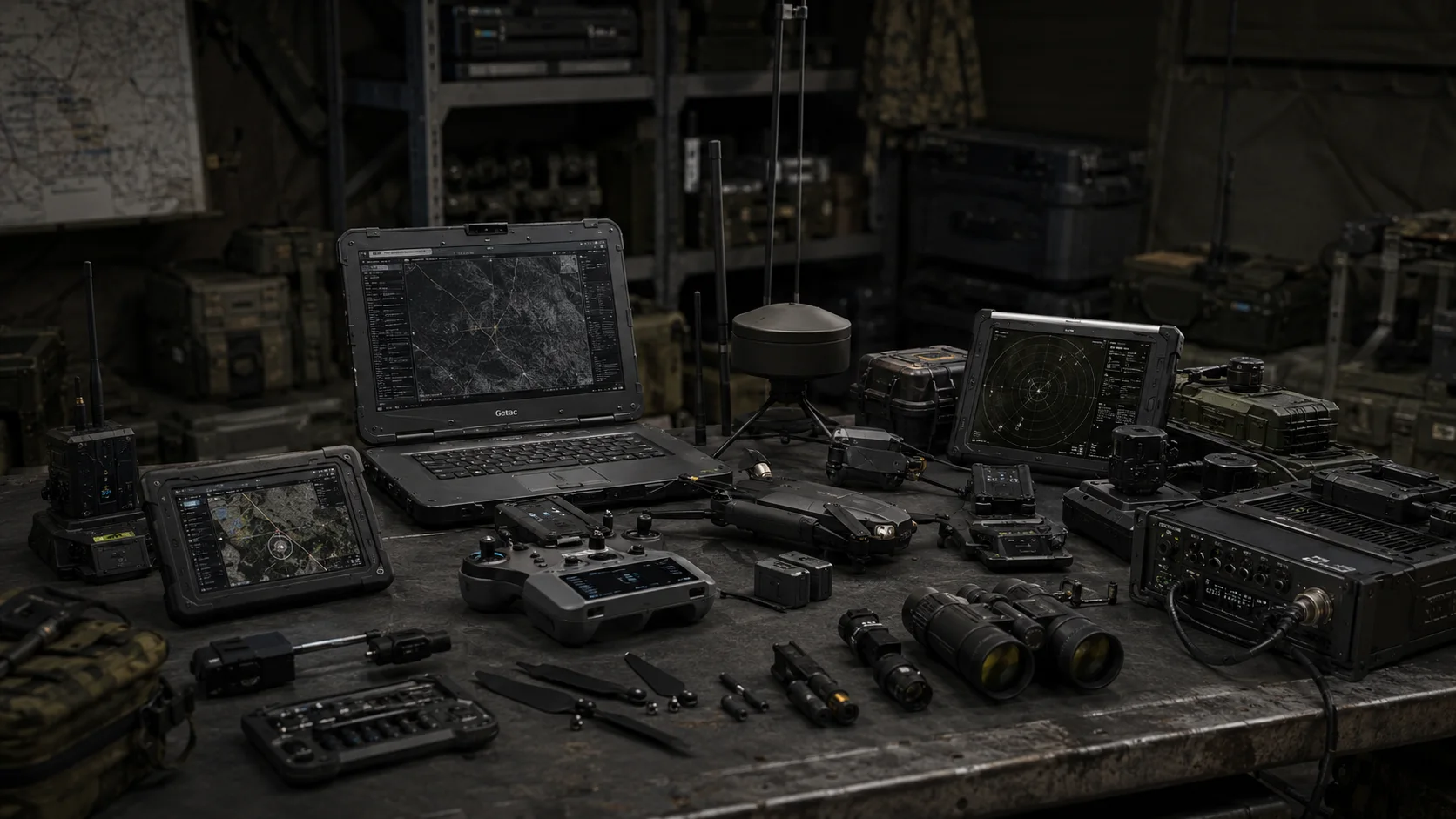
Tairos drone detection is the awareness layer of Picket and a standalone counter-UAS sensing package. It combines RF, radar, acoustic and optical information because no single sensor detects every threat in every environment.
Four complementary modalities
RF detection
Passively identifies active control, video or telemetry emissions. It can provide early bearing information without transmitting, but it cannot detect a platform that produces no observable radio link.
Radar
Actively detects an airframe regardless of whether it has an active control link and provides range, bearing and motion data. Radar is integrated from an appropriate specialist source and correlated with the other sensing layers.
Acoustic detection
Passively detects motor and propeller signatures for close-in warning. It is inexpensive and useful around fixed sites, while background noise and target type determine its effectiveness.
Optical and thermal sensing
Provides visual or thermal confirmation and supports classification. Weather, lighting, field of view and sensor quality remain real constraints.
Fusion creates the useful output
The product output is not four separate alarms. Sentinel Fusion correlates the reports into one classified track and presents the result in Panorama. The operator sees one object with its contributing sensor evidence rather than reconciling separate screens by hand.
That track can cue Picket’s electronic or kinetic response layers within the authorized mission rules.
Deployment configurations
Fixed-site node
Combines sensor types on a mast or permanent structure for a base, port or critical-infrastructure perimeter.
Mobile node
Places the sensor package on a vehicle-mounted mast for forward or convoy defense.
Distributed belt
Networks multiple lower-cost passive nodes across an approach area and fuses their tracks with radar and optical confirmation where available.
Advantages
- Different physics cover different threat behaviors.
- Passive sensors add coverage without continuously transmitting.
- External radar feeds and Tairos sensors enter the same Fusion picture.
- The cue reaches the same system that manages response, operator authority and mission state.
Integration boundaries
Detection and classification inform the decision; they do not authorize an effect. Active sensing and data integration are configured around the customer’s airspace, regulatory and security requirements.