Model
Apex-G
A reusable direct-fire configuration whose mass, thrust and effector reference share one primary axis.
Mission fit
- Effect
- Collinear structure
- the center of mass, thrust axis and bore reference are aligned through the aircraft
- Rigid bore-to-inertial reference
- the effector and flight controller reference share the load-bearing structure, limiting relative movement between believed and physical aim
- Controlled firing pass
- the airframe establishes the firing solution through its path and attitude rather than attempting a stationary firing posture
- Effector-state feedback
- Sentinel uses the installed configuration and carried-state information to maintain the aircraft trim model
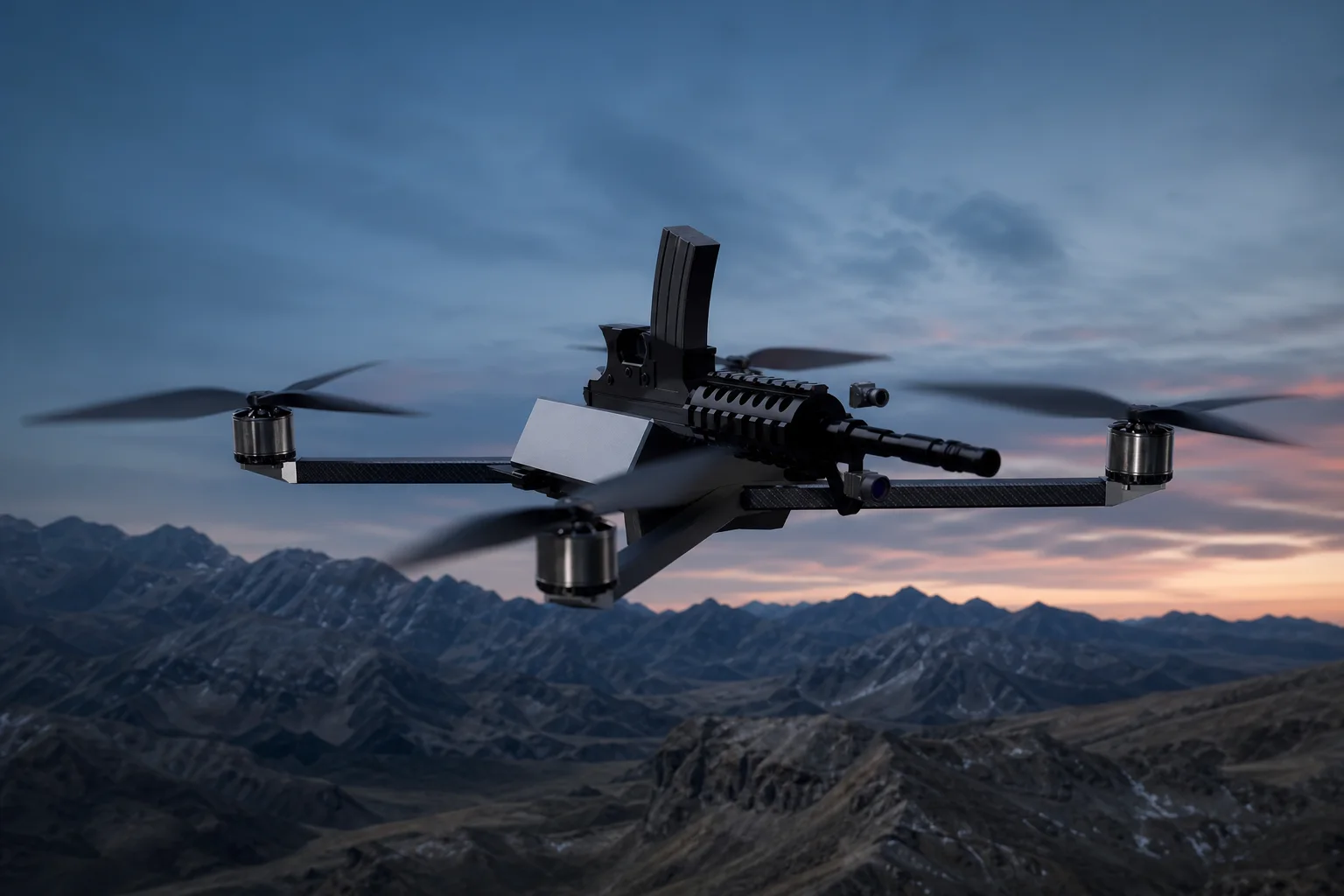
Reusable direct fire from an aircraft built around the firing axis.
Apex-G integrates a direct-fire effector into the Apex airframe. The aircraft aligns mass, thrust and the effector reference around one primary axis so reaction force produces less unwanted rotation than an offset mount.
Mission scenario
Apex-G supports authorized direct-fire missions against approved materiel and airborne threats. The aircraft approaches on a controlled pass, Sentinel maintains the target and aircraft state, and the operator authorizes the engagement when the firing condition is met. The platform then continues the sortie or returns for service and re-arming.
How the configuration works
- Collinear structure: the center of mass, thrust axis and bore reference are aligned through the aircraft.
- Rigid bore-to-inertial reference: the effector and flight controller reference share the load-bearing structure, limiting relative movement between believed and physical aim.
- Controlled firing pass: the airframe establishes the firing solution through its path and attitude rather than attempting a stationary firing posture.
- Effector-state feedback: Sentinel uses the installed configuration and carried-state information to maintain the aircraft trim model.
- Modular integration: the direct-fire configuration connects through the Apex mission interface and common operator workflow.
Key advantages
- Physical reaction management: geometry reduces the torque created by an offset effect line.
- Airframe as the aiming platform: flight path and attitude establish the firing window.
- Reusable aircraft: the vehicle is not consumed by each engagement.
- Effector-aware control: aircraft-state logic accounts for the installed direct-fire configuration.
- Positive authorization: each engagement remains under human control.
Sentinel relationship
Sentinel combines target tracking, navigation and aircraft-state estimation with the operator’s engagement workflow. The direct-fire effector cannot create its own authority. Target selection and engagement authorization remain human-in-the-loop, and the operator retains abort authority.
Related configuration
Apex-L uses the same base aircraft for launched-effect delivery. Where Apex-G produces a direct ballistic effect from the aircraft, Apex-L releases an approved munition and returns.