Model
Strix 15
The fifteen-inch X4 workhorse for reconnaissance, coordinated effect and larger mission equipment.
Mission fit
- Effect
- Awareness
- Backbone
- Airframe class
- Fifteen-inch X4 FPV multirotor
- Structure
- Carbon-fiber airframe with folding arms
- Roles
- Strike, reconnaissance and mesh sub-lead
- Sensing
- Electro-optical and thermal mission sensing
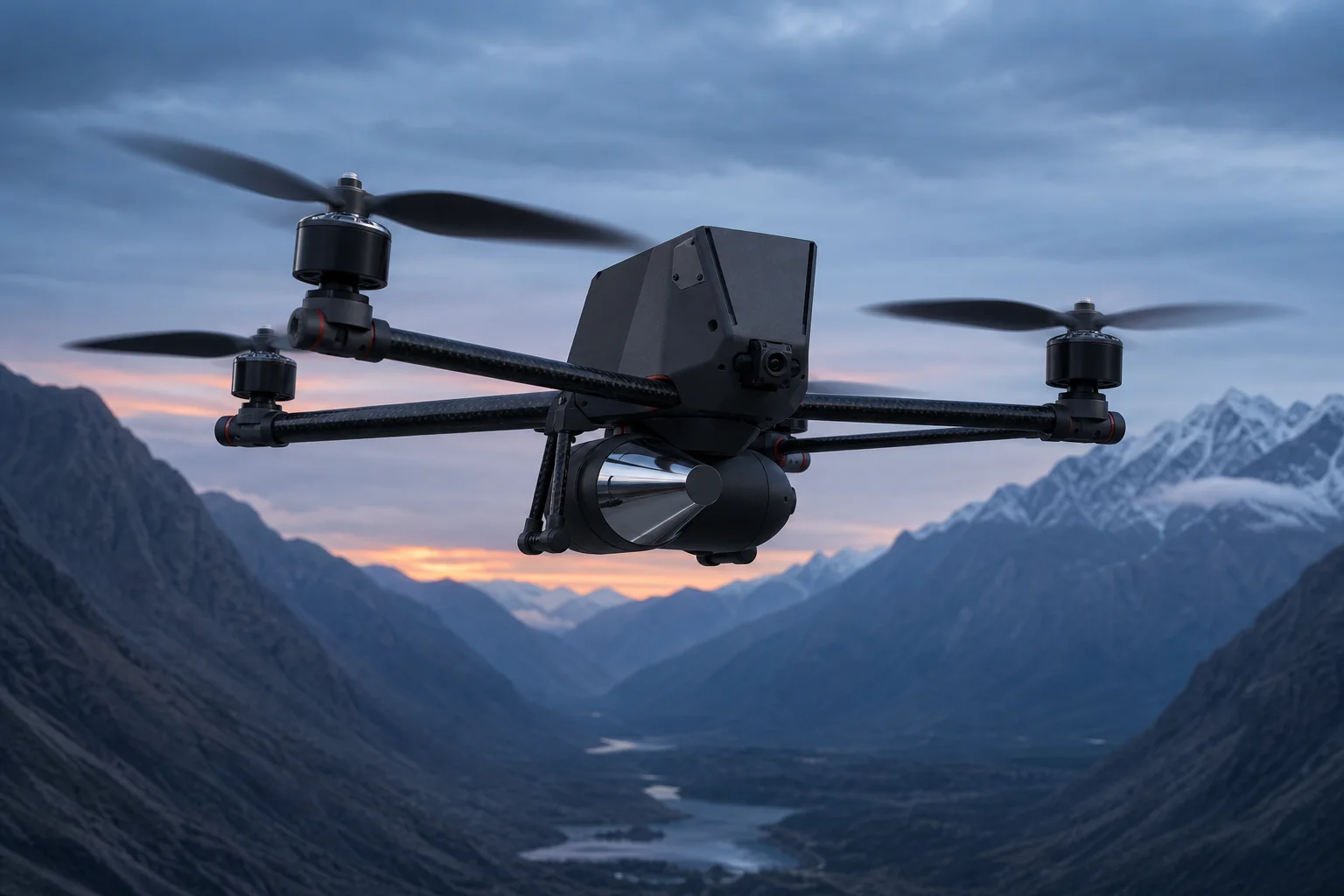
The fifteen-inch X4 workhorse for reconnaissance, coordinated strike and larger mission equipment.
Strix 15 uses its larger airframe and power envelope for an integrated Sentinel package, fused electro-optical and thermal sensing, visual-inertial navigation and a standard-tier mission interface. Folding arms support transport while retaining the direct flight character of the Strix family.
Mission role
Strix 15 serves missions that need more sensor and mission-equipment capacity than Strix 10 without moving to the heavy formation-lead class. It can carry an authorized effect module for strike or an ISR package for reusable reconnaissance on the same base airframe.
Within a mixed Strix cell, Strix 15 is the workhorse aircraft. It can accept tasking from Strix 20, share its sensor picture with the formation and assume a coordination role if the primary lead is unavailable.
Configuration and operating model
The aircraft uses a fifteen-inch X4 carbon-fiber multirotor with folding arms and an integrated lower mission bay. Its Sentinel package combines onboard perception, navigation and mesh functions. EO and thermal inputs support observation across changing light and obscuration, while visual-inertial navigation complements satellite positioning over the mission route.
Two mission configurations share the same aircraft:
- Effect configuration: carries an approved effect module through the standard-tier mission interface.
- ISR configuration: replaces the effect module with a reconnaissance package and returns for repeated use.
Key advantages
- Workhorse capacity: the physical class supports richer sensing and larger mission equipment while remaining within the FPV multirotor family.
- Fused sensing: electro-optical and thermal inputs feed the onboard mission picture.
- Navigation diversity: visual-inertial, optical and inertial inputs complement satellite navigation.
- Mesh resilience: Strix 15 operates as a cell member and can take a sub-lead role.
- Transport-aware structure: folding arms reduce the operating-versus-packed tradeoff.
- One airframe, two mission paths: ISR and effect configurations use the same base aircraft and operator logic.
Sentinel relationship
Strix 15 carries the mid-tier Sentinel package. The aircraft processes sensing and navigation onboard, exchanges tracks and state through the mesh, and keeps the operator informed when a data path degrades. In a mixed formation, it bridges the distributed Strix 10 layer and the formation-leading Strix 20.
Operator authority
Effect release remains human-in-the-loop. The mission interface separates authorization from aircraft control, and the operator can abort or return the aircraft when an effect has not been released. Non-lethal configurations carry no effect module.
Public configuration
| Attribute | Public description |
|---|---|
| Airframe class | Fifteen-inch X4 FPV multirotor |
| Structure | Carbon-fiber airframe with folding arms |
| Roles | Strike, reconnaissance and mesh sub-lead |
| Sensing | Electro-optical and thermal mission sensing |
| Navigation | GNSS, visual-inertial, optical and inertial inputs |
| Mission interface | Standard-tier modular interface with hardware authorization boundary |