Model
Strix 10
The ten-inch X4 member optimized for agility, distribution, direct FPV control and light-tier mission equipment.
Mission fit
- Effect
- Awareness
- Backbone
- Airframe class
- Ten-inch X4 FPV multirotor
- Structure
- Non-folding carbon-fiber unibody
- Roles
- Reconnaissance, relay and authorized effect
- Video
- Analog or digital by configuration
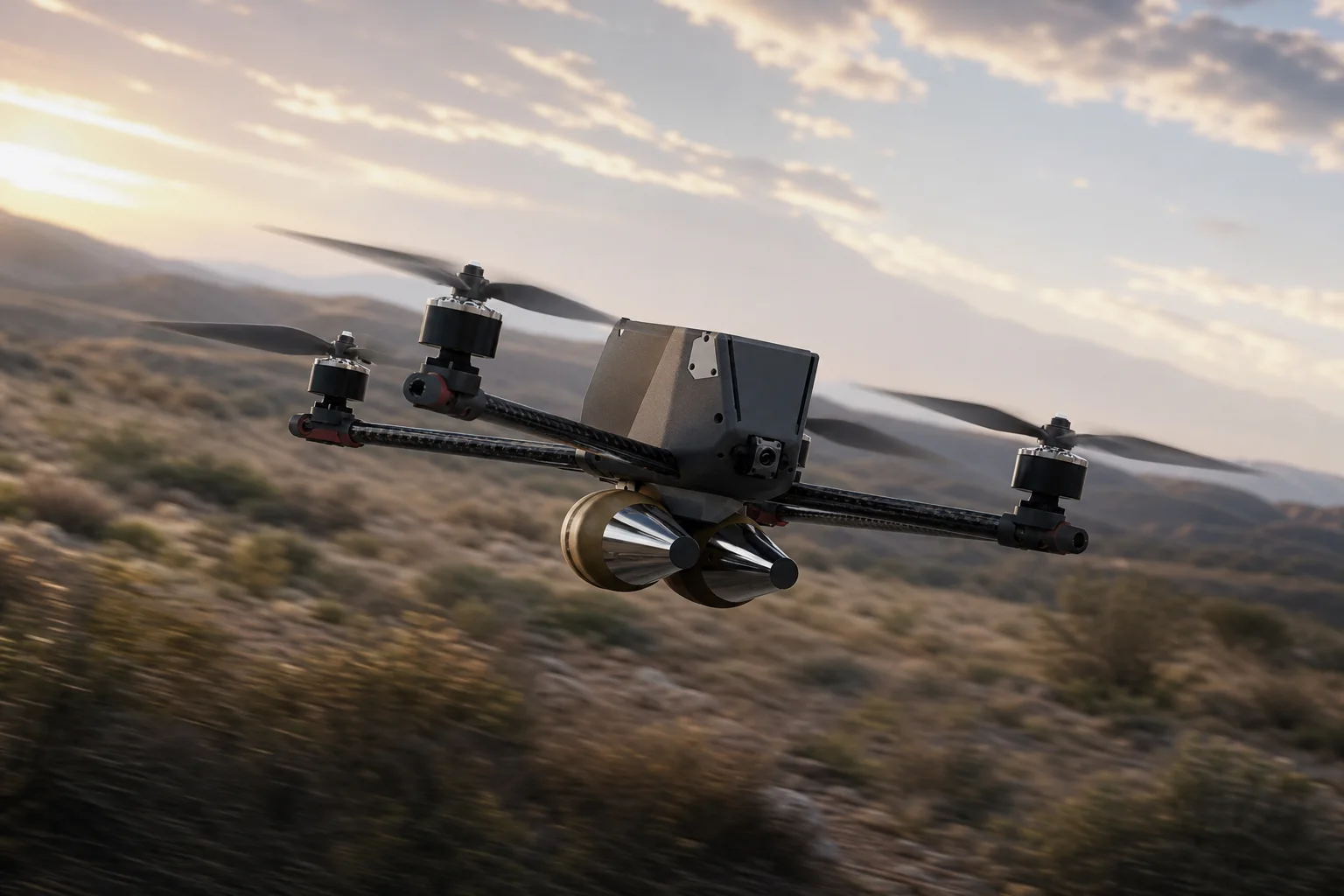
The ten-inch X4 member of the Strix family, optimized for agility, distribution and direct FPV control.
Strix 10 combines a compact carbon-fiber multirotor with a Tairos-configured control link, field-changeable mission equipment and an available onboard Sentinel package. It serves reconnaissance and authorized-effect roles on the same airframe.
Mission role
Strix 10 is the family member for missions where aircraft presence, maneuverability and distribution matter more than carrying the largest mission package. Units can use it as an FPV workhorse, an onboard-autonomy aircraft, a reconnaissance node or an effect platform depending on the selected build and module.
Airframe and configuration
The aircraft uses a ten-inch X4 layout with a non-folding carbon-fiber unibody. The compact structure reduces joints and keeps the vehicle easy to stack and handle. Detachable landing gear leaves the lower profile clear when the mission does not require it.
Two system builds organize the configuration menu:
- Core FPV build: analog video, Tairos-configured long-range control link, carbon-fiber airframe and the light-tier mission interface.
- Sentinel build: adds onboard visual tracking, optical navigation and mission logic, with digital video, alternate imaging and other supported sensor choices available by configuration.
Reconnaissance and effect modules attach through the same tier-matched mission interface. The effect module is absent from non-lethal configurations.
Key advantages
- Agile physical class: the ten-inch X4 layout keeps the direct dive, roll and recovery character of an FPV aircraft.
- Mission choice without a new airframe: sensing, relay, reconnaissance and authorized-effect modules share the same platform interface.
- Onboard navigation and tracking: the Sentinel build keeps mission functions on the aircraft during link degradation.
- Video-path choice: analog and digital configurations let the operator match latency and image requirements to the mission.
- Family participation: a mesh-enabled Sentinel configuration can operate independently or as a member of a larger Strix formation.
Sentinel relationship
The onboard Sentinel package combines visual tracking, optical and inertial navigation, and terminal mission logic. When configured for mesh participation, Strix 10 shares status and observations with a capable lead aircraft. Engagement authority remains with the operator and does not pass from one aircraft to another.
Operator authority
Lethal configurations require human-in-the-loop authorization through a hardware boundary. The operator can withhold or revoke authorization, and non-lethal configurations carry no effect module. Mission software cannot independently arm the aircraft.
Public configuration
| Attribute | Public description |
|---|---|
| Airframe class | Ten-inch X4 FPV multirotor |
| Structure | Non-folding carbon-fiber unibody |
| Roles | Reconnaissance, relay and authorized effect |
| Video | Analog or digital by configuration |
| Navigation | GNSS, optical and inertial inputs by build |
| Mission interface | Light-tier modular interface with hardware authorization boundary |